


Bright Sparks: Alessandro Volta
The modern world would look very different without the contributions of those who helped us harness electricity and develop electrical equipment. Here, we focus on some of the pioneers of the electrical world and their remarkable achievements.
NAME: Alessandro Volta (Conte Alessandro Giuseppe Antonio Anastasio Volta)
DATES: 18 February 1745 (Como, Italy) – 5 March 1827 (Como, Italy)
EARLY LIFE: One of nine children (with four brothers and four sisters), Volta was the son of an Italian noble. He excelled at the Jesuit-run schools he attended, mastering foreign languages and showing great interest in chemistry.
At the Benzi Royal Seminary, he met cleric Giulio Cesare who became his patron. Then, aged 18, he began exchanging letters with French physicist Abbé Jean- Antoine Nollet, in which he put forward the idea that electrical attraction followed Newton’s laws of gravity.
FIRST INVENTION: Improvements to the electrophorus, a generator of static electricity.
MAJOR ACHIEVEMENTS: A physicist, chemist and pioneer of electrical science, Volta is best known for inventing the electric battery – the first source of continual current.
1700s
1775 improved the electrophorus.
1776-7 discovered and isolated methane gas; found that methane mixed with air could be exploded using an electric spark – the basis of the internal combustion engine. Also studied what’s now known as capacitance.
1777 pioneered the development of the eudiometer through his “Volta Pistol”, used for testing air and the flammability of gases and for demonstrating the chemical effects of electricity.
1779 appointed Professor of Experimental Physics at the University of Pavia.
Early 1800s
1800 invented the “voltaic pile” – effectively the first electric battery –which proved that electricity could be generated chemically – and reported this invention in a letter to the Royal Society.
1801 demonstrated the voltaic pile to Napoleon at the Institute of France
in Paris.
1815 became Director of the Philosophical Faculty at the University of Padua.
3 THINGS YOU MIGHT NOT KNOW:
1. Napoleon made Volta a count in 1810.
2. Volta preferred to live a quiet life and keep out of the public eye, especially in his later years.
3. Volta is buried at his old estate in Camnago, where a museum and a memorial, the Tempio Voltiano, have been built in his memory.
Legacy:
In 1881, more than 50 years after Volta’s death, the volt was named in his honour, following his work on Volta’s Law of Capacitance, which found that the electric potential in a capacitor is directly proportional to its electric charge.
The Voltian Foundation, which promotes scientific activities, is based at the Villa Olmo, close to the Tempio Voltiano.

Our guide to building energy management systems
Building energy management systems (BEMS) are systems that allow you to monitor, control, and optimise the energy used within your building. The phrase building energy management system (BEMS) is often used interchangeably with the phrase building management system (BMS), but there are some differences. A BEMS is focused on energy-related systems such as lighting, heating, […]
Read more
How far does power travel and what impact does distance have on performance
It’s easy to take our electricity supply for granted. We flick a switch and instantly have light or power. We don’t even think about it unless there’s an issue or an outage. But when there is an issue or outage, the impact can be significant. For manufacturers, even the smallest change in power can make […]
Read more
Why visibility of the production process is so important
Operational excellence, efficiency and quality are top priorities for almost every manufacturer worldwide. These things lead to improved productivity, happier customers and reduced waste – all of which result in increased profits. Visibility of the production process is the key to achieving these things. And manufacturers now have access to technology that can provide real-time […]
Read more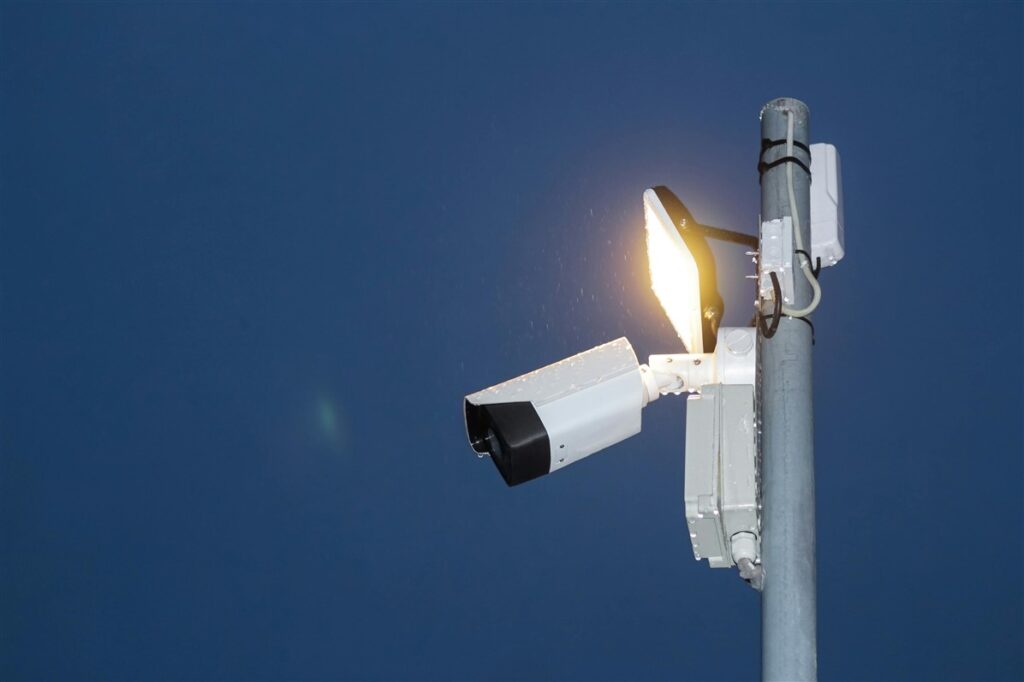
Will security lighting help to protect my staff?
Looking after the safety and well-being of employees should be a priority for any business. And while it’s not possible to mitigate every risk, there are measures you can take to improve their safety and security. One measure that is often overlooked is the installation of security lighting. When daylight disappears, visibility is reduced, increasing […]
Read more
Top 5 considerations when comparing electrical quotes
Budget is always a factor when you’re considering any type of upgrade, revamp, or maintenance work within your factory. But when it comes to electrical work, you have to consider more than just money. Don’t rush into accepting the cheapest electrical quotes without knowing exactly what you’re getting. Electrical work is not an area where […]
Read more
What is the role of companies in reducing our carbon footprint?
We should all be taking responsibility for protecting our planet and a big part of that is reducing our carbon footprint. But while it falls to all of us to do our bit, there is additional pressure on manufacturers, especially those with high carbon emissions. As an absolute minimum, these companies should ensure compliance with […]
Read more